
Why a healthy gum foundation matters before full mouth rehabilitation in Anacortes, WA
It can be frustrating to hear that your gums need attention first when what you really want is a smile you feel good about. That reaction makes sense, and it's one we hear often. At Madrona Dental Care, we take the time to explain why the order of treatment matters so much. A full mouth rehabilitation is a big investment in your health, comfort, and appearance, and the gum and bone that support your teeth are the starting point for all of it. If you'd like to talk through your own situation with our Anacortes dental team, you can reach us at (360) 293-4695.
Why gum and bone health come first in a full mouth rehabilitation
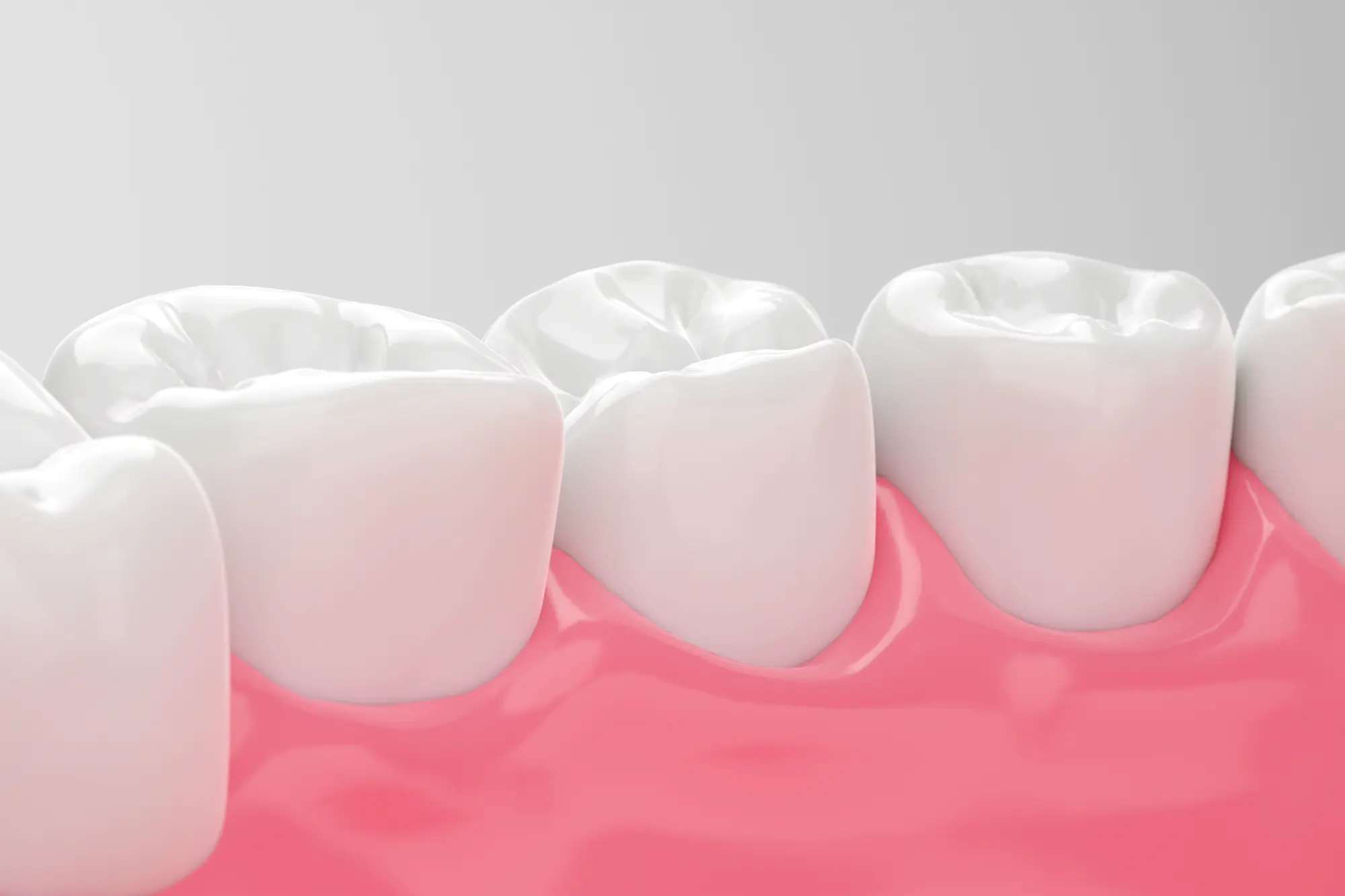
The bone that surrounds your teeth is the foundation and anchorage system for your entire dentition. It works a lot like the foundation of a house, which is the first thing built and the thing that holds up everything above it. If we're planning a full mouth rehabilitation, we need to know that the foundation underneath is sound before we build on it.
When teeth are affected by periodontal disease and aren't solidly anchored, it's hard to feel confident that new dental work will be predictable or long lasting. The encouraging part is that when periodontally involved teeth are identified, there are treatment options to repair or replace them. The key is finding out where you stand before restorative work begins.
How gum disease develops around the teeth
Healthy gum tissue contains fibers that form a seal around each tooth, attaching to the tooth roots. That seal helps protect the teeth and the bone beneath them. When inflammation is present, that attachment can break down, and this breakdown is what leads to advanced gum disease.
This is why we look closely at the gums during an exam, not just at the teeth themselves. Gum disease can develop without much notice, so a careful evaluation helps us see what's happening beneath the surface before it affects your treatment.
What happens if we treat teeth before controlling gum disease
Controlling gum disease activity is step one. If we place new restorations before active disease is under control, it can reduce the predictability of the results. It can also make the dentistry more technically challenging, and it raises the risk of unfavorable cosmetic or functional outcomes when things are done out of order.
There are a few practical reasons for this:
- Many procedures work best when the teeth can be kept clean and dry, which is difficult when the gums are inflamed.
- Crowns, onlays, and veneers are made by a dental laboratory, so we need to give the lab accurate information. Active gum disease can compromise the quality of that information.
- A digital scan for a crown also depends on a clean, dry environment, which isn't always possible with unhealthy gums.
- Treating the teeth first can lead to unwanted cosmetic concerns, because the gum tissue can change once the gum disease is treated.
Signs we look for during your exam
We use a periodontal probe, a small measuring tool, to gently measure the space between your teeth and gums. When that space is 3 mm deep or less, it's generally an environment you can keep clean at home with regular brushing, flossing, and water picking. If the pockets are deeper, we may need to explore additional therapy to help achieve more stability.
Bleeding is another important sign. Healthy gums shouldn't bleed with gentle probing, so our goal is always zero bleeding. Bleeding with light manipulation of the gum tissue, along with deep pockets between the teeth and gums, tells us the gums may not be healthy enough to move ahead with dental treatment right away.
How we treat gum disease before restorative dentistry
For many patients with mild to moderate gum disease, we can manage it with periodontal therapy. In our practice, that's a nonsurgical deep cleaning. In many cases we use anesthetic for patient comfort. The therapy aims to remove tartar buildup from beneath the gums and disrupt the bacterial biofilm that's causing the disease. It also gives us a chance to tailor an at-home oral hygiene plan to your needs.
In some cases of more advanced periodontal disease, we may take a team approach and work with a periodontist, a gum specialist who has additional tools for treating active disease. Your own recommendation will depend on what we find during your exam.
Maintaining healthy gums after treatment
Once disease activity is managed, keeping your gums healthy becomes essential. For patients with healthy gums, we recommend routine cleanings every six months to maintain that health. For patients with a history of periodontal disease, periodontal maintenance visits may be recommended every three, four, or six months, depending on your individual risk.
These visits help keep the disease in remission, and they let us spot any return of disease activity early. If it does return, we can treat it right away to limit further damage to your teeth and supporting structures.
Frequently asked questions
Why can't we just start with the cosmetic work if that's my main concern?
We understand wanting to see results quickly. The trouble is that restorations placed over active gum disease may be less predictable, harder to do well, and more likely to lead to cosmetic or functional problems. Taking time to stabilize your gums first can support a more predictable, longer-lasting result. Giving up a little time on the cosmetic side now is a worthwhile trade for long-term health and stability. Rome wasn't built in a day, and your smile doesn't have to be either.
Does needing gum treatment mean I can't have a full mouth rehabilitation?
Not necessarily. For many patients, gum disease can be managed first, and then restorative planning can move forward. How that looks depends on what we find in your exam and how your gums respond. Where disease is more advanced, we may involve a periodontist as part of your care.
What does it mean if my gums bleed when they're touched gently?
Healthy gums shouldn't bleed with gentle probing, so bleeding is often a sign of inflammation. It's one of the things we look for when deciding whether your gums are ready for restorative dentistry. If you've noticed bleeding when you brush or floss, it's worth having it evaluated.
Starting with a strong foundation at Madrona Dental Care
A beautiful, functional smile begins with healthy gums and supportive bone. If you're considering a full mouth rehabilitation in the Anacortes area, we'd be glad to evaluate your gums, explain what we see, and talk through your options at a pace that feels comfortable. Call Madrona Dental Care at (360) 293-4695 or schedule your visit today.
Recent Posts
Why a healthy gum foundation matters before full mouth rehabilitation in Anacortes, WA

When Does a Tooth Need a Dental Crown?
Can a Tooth Be Saved with Decay Under a Crown?
How Do Implant-Supported Teeth Work? It Starts With a Plan
Why Do Providers of Permanent Dental Implants Place a Bone Graft Immediately After an Extraction?
Why a Protective Dental Crown is Essential After a Root Canal
Why Does Advanced Hygiene Care Go Beyond Simple Scraping?

What Are the Steps of a Full Mouth Reconstruction in Anacortes?
Welcome to Madrona Dental Care

Come in with questions. Leave with clarity.
Whether you're in need of preventive care, restorative treatments, or a more complete understanding of your oral health, Dr. Gray and the Madrona Dental Care team are here to help.